At New York’s Nat Gala, celebrities rub shoulders with nature protectors. This year’s event was a deep dive into the ecosystems that cover most of the Earth’s surface, but only get a tiny drop of the conservation funding.
“Climate change isn’t a moral failure, it’s an accounting failure. Our economy does not account for nature because it does not see nature.
Those were the words of Tenzin Seldon, who addressed an audience of hundreds on Sunday night in New York, at the Nat Gala, introduced by one of her biggest supporters, Emma Watson.
Born and raised in the foothills of the Indian Himalayas, Tenzin spent her early childhood watching the glaciers melt and retreat right in front of her. That experience of seeing the mountains shift before her eyes, without initially having the scientific vocabulary for “climate change”, she told us, put her on the path to becoming a climate investor.


Tenzin encapsulates what the hottest new gala in town is all about – closing the nature finance gap. That might sound important, but for some reason, nature investing has not yet hit the mainstream. And that’s what the Nat Gala, now in its second year, is out to achieve.
So what is it? Think the Met Gala (the super-exclusive annual fundraiser hosted by the Metropolitan Museum of Art, where A-listers compete for the boldest red carpet looks) but for nature, and you’ll understand what they’re trying to do.
With tickets starting at $25,000 for a seat, the idea behind the Nat Gala is to put celebrities and cultural icons in a room with the world’s leading conservationists, coral restorers, Indigenous leaders and, crucially, big-money investors, not only to raise awareness, but to raise money.
Lots of it.

Michelle Pfeiffer was just one of the famous faces attending the event.
So imagine a glamorous room in downtown Manhattan, filled with cultural heavyweights, from Michelle Pfeiffer, Sabrina Elba, and luxury designer Gabriela Hearst, to sustainability icon (and Billie Eilish’s mom) Maggie Baird and environmental drag queen Pattie Gonia. Alongside former Ikea CEO Jesper Brodin, legendary oceanographer Sylvia Earle, and Indigenous leaders like Chadian activist Hindou Oumarou Ibrahim and artist Dee Jay Two Bears, who hails from the Standing Rock Sioux Tribe.
The atmosphere was pretty electric.
Out of sight, out of mind
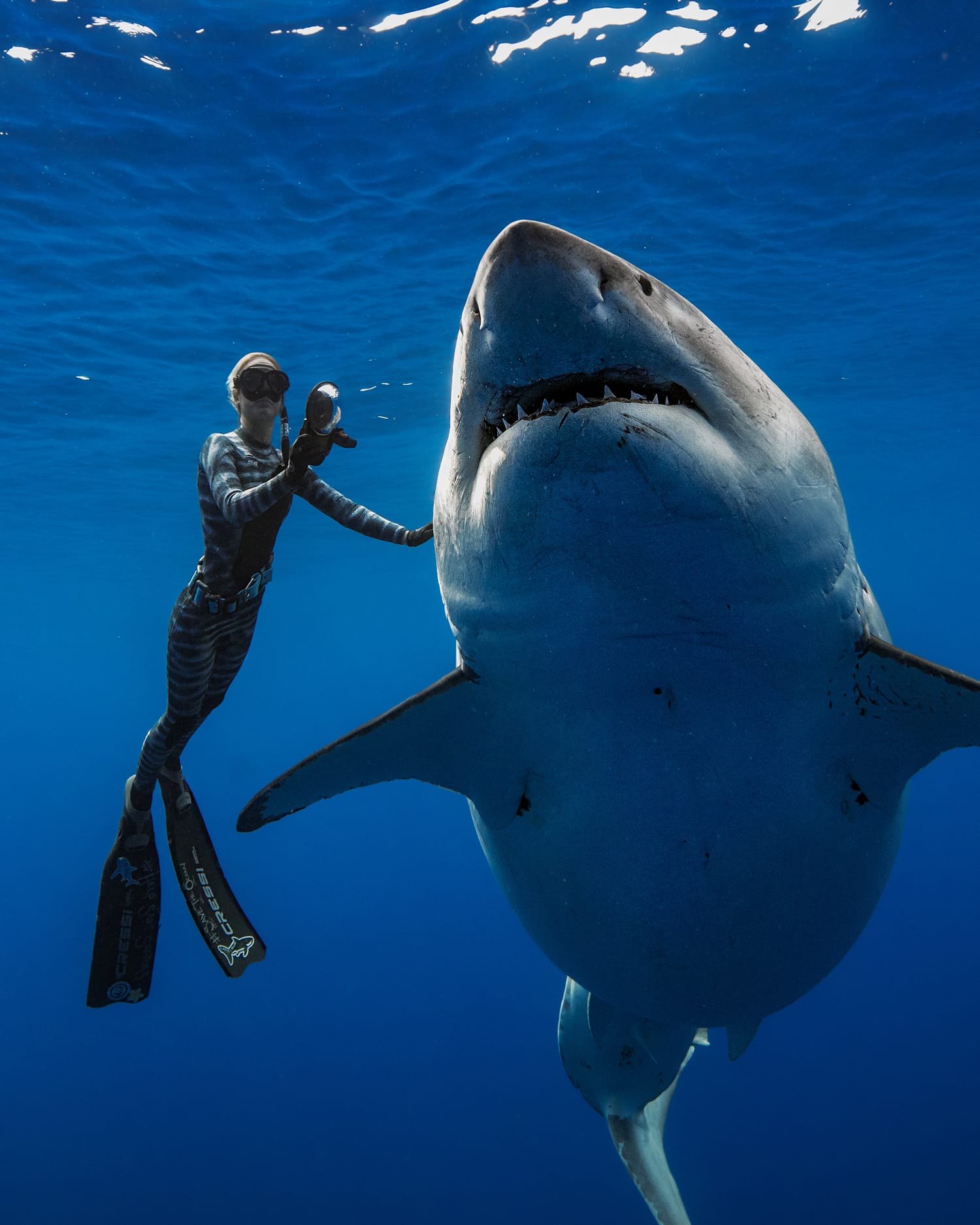
The theme this year was ‘Water is Life’. Why? Because despite covering 71% of the planet’s surface, oceans and waterways receive less than one per cent of global climate philanthropy. Of the United Nations’ 15 Sustainable Development Goals, conserving life below water is the one that gets the least funding.
“Life below water is hardly ever the poster child of global nature campaigns”
It’s a stat I put to the celebs on the ‘red’ carpet (actually made out of untreated woven straw) to get their reaction. They were shocked, to say the least.
“I think it’s because we have to learn to swim in order to even explore it,” said actor Bailey Bass, who learned to swim “properly” while filming Avatar: The Way of Water at age 13. “As much as we are made up of mainly water… we have to learn another skill that’s not native to us,” Bass told me.

Titouan Bernicot, Bailey Bass and guest at this year’s Nat Gala in New York City.
The result of this is that we talk about forests and the loss of wildlife on land a lot – historically using polar bears to alert people to the rapid melting of the Arctic, or chimps as a symbol to talk about deforestation – and we should. But life below water is hardly ever the poster child of global nature campaigns. This is despite the fact that the ocean is our largest carbon sink – absorbing more CO2 than even soil or trees. Seas generate more than half the oxygen we breathe, and the marine ecosystem feeds billions every day. Out of sight, out of mind, perhaps?
The Nat Gala did its best to redress this. The evening began with an excerpt from an immersive installation highlighting the threats facing the world’s salt marshes, by the artist Sophie Hunter. Preserving these critical but overlooked ecosystems starts with paying attention to them, Hunter’s installation reminded us.
The gala also placed Indigenous wisdom at the heart of its programme. This year marks a decade since thousands of Indigenous water protectors and allies assembled at the Standing Rock Indian Reservation in North Dakota to resist the construction of the Dakota Access Pipeline. The tagline for this year’s gala comes from their rallying cry, Mni wiconi, Lakota for ‘water is life’.

Indigenous artist Dee Jay Two Bears organized a performance merging traditional Indigenous dance styles like Fancy Dance with modern electronic music. The prime minister of the Polynesian island nation of Tonga, Lord Fakafānua, also issued an urgent call to protect the ocean corridors connecting Tonga to the Antarctic, calling for an end to krill fishing.
What was made abundantly clear was that Indigenous communities have successfully guarded global biodiversity for millennia, and their leadership must guide modern climate finance.
Filling a funding gap
In 2025 the Nat Gala raised $2 million, and this year it is on track to raise nearly $3 million. These funds go directly into partner NGOs including the Blue Marine Foundation, Conservation International, and Open Planet, a free-to-use library of high-quality nature footage created to amplify storytellers from underrepresented regions.
The Nat’s founder, Gail Gallie, explained why the shift to water was chosen this year: “2025 was really our general launch under the theme ‘We are Nature’. This year, partly to honor the 10-year anniversary of Standing Rock, and partly to mark the passing of the UN High Seas Treaty, I wanted to shift the attention to the water cycle. It’s a chance to celebrate the progress that’s been made, but also to highlight the huge opportunities for large-scale investment in areas like marine conservation, shipping, and water infrastructure.”
RELATED ARTICLES

Because it’s been a big year for the sea. In January 2026, the UN High Seas Treaty officially came into force – a historic milestone establishing the first legally binding framework to protect marine life across international waters.
For decades, these ‘high seas’, covering nearly half the Earth’s surface, existed as an ungoverned global commons, vulnerable to unregulated overfishing, deep-sea mining, and chemical pollution. Ocean pioneers like Sylvia Earle have spent over half a century campaigning for a mechanism like this.
“Behind the celebrity power there is real substance to the Nat’s mission”
Now the treaty will provide the legal machinery required to establish Marine Protected Areas in international waters. Crucially, it serves as the linchpin for achieving the global 30×30 target, which is the international commitment to safeguard at least 30 per cent of the world’s land and ocean by 2030.
So, in short, we’re seeing some progress on the ocean front. But so much more needs to be done – and that’s what the Nat Gala is on a mission to raise funds for.
Not just glitz and glamor
But behind the celebrity power, there is real substance to the Nat’s mission. It’s not all about the gala.
The Nat is solely focused on closing this nature finance gap, which stands at about $800 billion dollars in total. When it comes to water, that means working on issues like coastal restoration, raising capital for soil hydration, funding ocean technology startups – and even setting standards for water-cooling for data centers.
The strategy is to move conservation away from relying exclusively on small philanthropic grants and transform it into a legitimate, scalable asset class that yields real ecological and economic returns.
As co-founder Jay Lipman told me, “Nature needs money, nature is broke as hell – it’s existing right now off crumbs, and we need to give it the whole cookie. We need to make nature investable, if we want to preserve the oceans, forests, and food systems that we need to survive.”
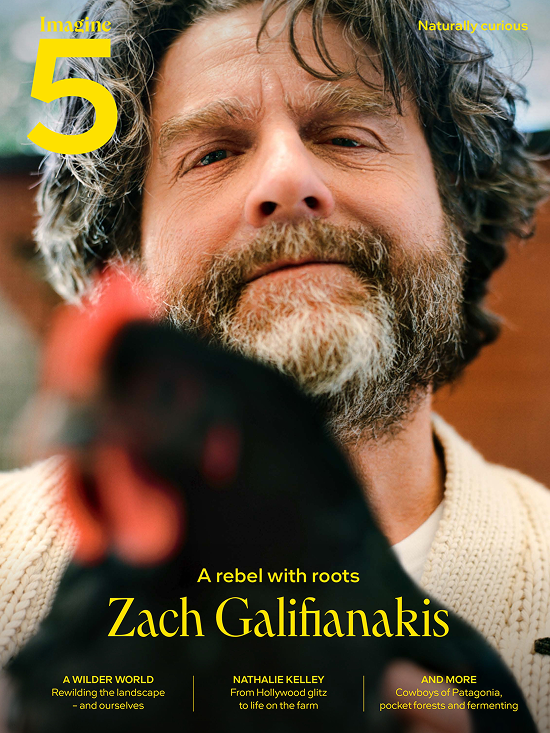
Focused on the wonderful world of rewilding, Volume 5 sees us get into the weeds – and go beyond the ferns – with our green-thumbed cover star Zach Galifianakis, walk with wolves in Slovenia, create a wilder world in Denmark, find meaning in fashion, and much, much more.